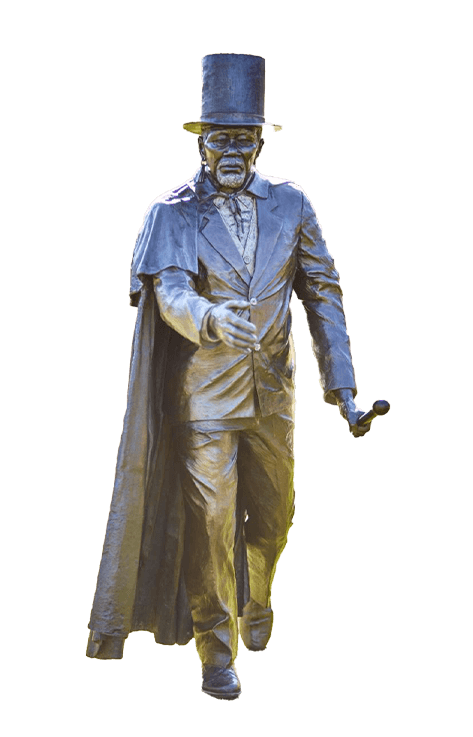

Walk along the Long March to Freedom and you meet people from three and a half centuries face to face: kings who resisted colonial conquest, writers, trade unionists, the women of the 1956 march, the leaders who negotiated our democracy. Each one stands life-size, in bronze, as if paused mid-stride.
What most visitors don’t see is how each of those figures got there. Every statue in the procession is made using the lost-wax method, also known by its French name, cire perdue. It is one of the oldest metalworking techniques in the world. Objects have been cast this way for more than 5 000 years, and while the materials have changed, the heart of the process has not.
Why go to all this trouble?
Lost-wax casting is slow. Each sculpture is effectively made twice: first in wax, then again in metal. So why use it? Because nothing else captures an artist’s work so faithfully. Every fold of a blanket, every crease in a jacket, every line on a face survives the journey from clay to bronze. And the result is built to stand outdoors and last for generations.
From idea to bronze in ten steps
1. The maquette
It starts small. The sculptor makes a maquette, a miniature model that acts as a “statement of intent”. It shows how the figure will stand, what they will wear and any meaningful object they might carry.
2. The life-size model
Once the maquette is approved, the artist scales up, building a detailed life-size version in clay, plasticine or plaster. This is the piece the public will eventually see, so every detail matters.
3. The first mould
A rubber layer, backed by a supporting shell of plaster, is applied over the model to take a perfect imprint. When the plaster has set, the mould is peeled away in pieces. Anything this mould misses is lost for good, so it has to capture everything.
4. The wax copy
Molten wax is brushed into the rubber moulds in layers. The hardened wax pieces are pulled out, checked and corrected by hand. Wax rods and a pouring cup are then attached. They will become the channels the liquid bronze flows through.
5. The ceramic shell
The wax is dipped into ceramic sand again and again, each coat coarser than the last, until it is wrapped in a strong ceramic shell. This shell will hold the bronze.
6. Losing the wax
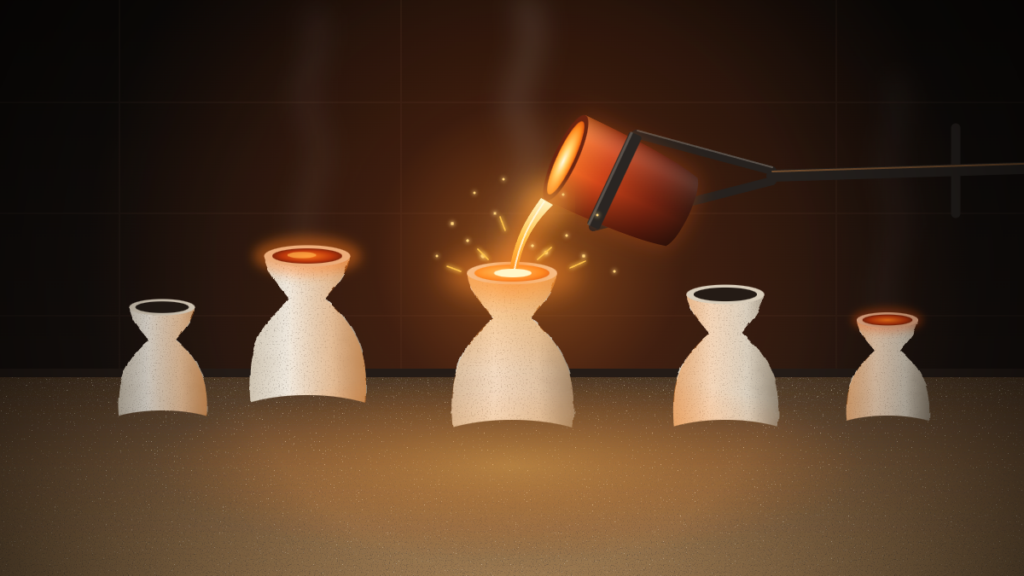
Here is the moment that gives the method its name. The shell is fired in a kiln: the ceramic bakes hard while the wax inside melts and runs out. It is “lost”, leaving a hollow shell in the exact shape of the sculpture. The shell is then set in a sandbed, ready for casting.
7. Casting
Molten bronze, at almost 1 200 degrees Celsius, is poured into the hollow shell. The moulds are sunk into the sand to help the metal cool.
8. Breaking it free
After cooling for several hours, the shell is carefully chiselled away to reveal the raw bronze, still in pieces.
9. Sandblasting and assembly
The last fragments of ceramic are sandblasted off. The pieces are welded together, the weld marks filed down, and extremely fine glass beads are used to give the bronze an even finish.
10. Polish and patina
Finally, the bronze is polished by hand to prepare it for its patina. This is the thin surface layer, formed through natural oxidation or chemical treatment, that gives each statue its colour.
Many hands, one procession
No bronze is the work of one person. Each begins with one of more than forty sculptors whose work stands in the procession, and is finished by a large team of highly skilled artists and artisans at the foundry. It is a fitting way to honour a struggle that was itself the work of many hands.
Next time you stand in front of Nelson Mandela, Lilian Ngoyi or King Moshoeshoe I, look closely at the folds of their clothing and the expressions on their faces. Every one of those details survived ten steps, two castings and 1 200 degrees of heat to reach you.
See it for yourself
- The Process: the full ten steps of lost-wax casting
- The Artists: meet the sculptors behind the bronzes
- 100 Bronze Statues: explore the procession in march order
- Visit LMTF: open Monday to Sunday and on public holidays, 10:00 to 16:30, in Century City, Cape Town